

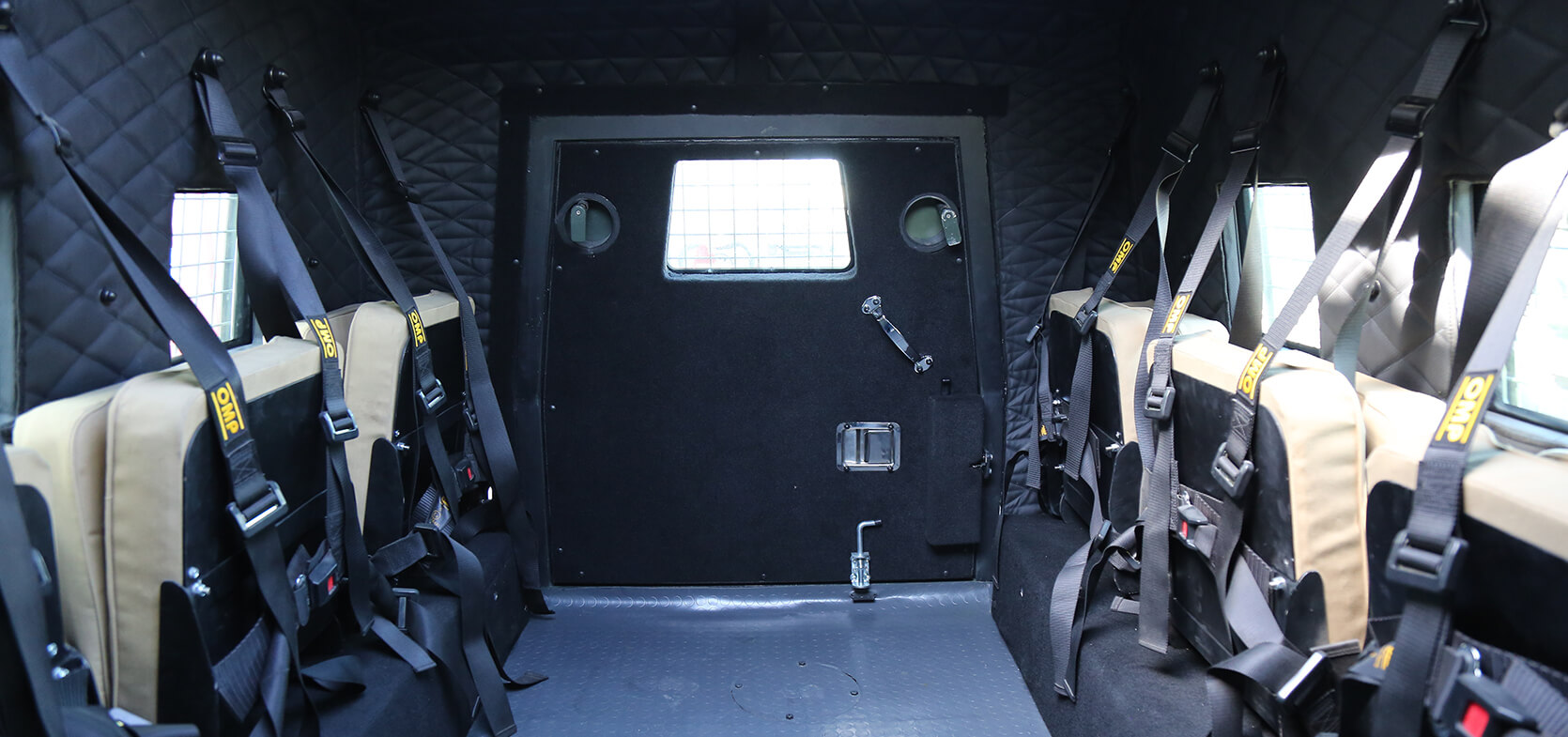
If you already own a car you like, converting it can be worth investigating. But the first question is whether that particular vehicle can support the proposed armoring and still meet your passenger, luggage and everyday driving needs.
Buying an armored vehicle gives you another route: compare an identified stock vehicle or commission a build around your requirements. That option still needs its own checks on condition, protection evidence, usable capacity and registration.
For Dubai and UAE buyers, start with a suitability review of your existing car and a written comparison against a purchase option. Use the same passenger load, intended use, destination and protection requirements for both. The comparison table and worksheet below will help you identify what is documented and what remains unanswered.
Compare the three routes
| Decision point | Armor your existing car | Buy an identified stock vehicle | Commission an armored vehicle |
|---|---|---|---|
| Starting point | Your exact car, its condition and service history | A specific vehicle and its existing build records | A proposed base vehicle and agreed specification |
| First check | Is the car suitable for the requested conversion? | Does this particular vehicle meet your requirements? | Does the proposed platform fit the intended finished configuration? |
| Passenger and luggage needs | Check what capacity remains after the proposed work | Verify the finished vehicle's usable capacity | Make the required load part of the specification |
| Choice of features | Ask what can be retained, changed or removed | Check what is already installed and what alterations are feasible | Agree the equipment and interior layout before build approval |
| Use of your current car | Confirm the period it must be off the road for assessment, work and inspections | Confirm preparation and collection arrangements | Plan whether to retain your current car until handover |
| Protection evidence | Identify the evidence supporting the proposed conversion | Match the records to the vehicle and its configuration | Agree the evidence to be supplied at handover |
| Timing | Depends on assessment, work scope, approvals and completion | Confirm actual availability, preparation and handover conditions | Confirm vehicle sourcing, build stages, approvals and handover conditions |
| UAE road use | Establish the modification and inspection path | Check registration or transfer requirements for that vehicle | Establish the registration and approval path for the proposed build |
| Main uncertainty to resolve | Whether your existing car is a suitable starting point | Whether the advertised vehicle and documentation match your needs | Whether the agreed specification will be delivered and evidenced |
A stock vehicle may be worth comparing when you have a defined deadline. Ask for a written handover date and its conditions; an online listing alone does not establish availability or delivery readiness.
When converting your existing car is worth investigating
Conversion may suit a buyer who wants to retain a familiar vehicle and whose requirements can be accommodated by that platform. Familiarity is useful, but it cannot establish engineering suitability.
Start an existing-car armoring review with the make, model, year, variant, mileage, service history and any previous modifications or accident repairs. Include the number of people and the luggage or equipment the vehicle must carry.
Ask for written answers to these questions:
- What condition checks are needed first? Identify any repairs or further inspections required before a conversion can be assessed.
- What will the completed vehicle weigh? Ask for the estimated finished mass, how it will be verified, the applicable vehicle and axle limits, and the capacity remaining for people and luggage.
- Which systems will be assessed or changed? Request the proposed scope for brakes, suspension, tyres, doors, cooling, electrical equipment and other affected systems.
- What changes inside the cabin? Confirm seating, access, window operation, visibility, controls and the equipment you want to retain.
- What documentation will accompany the work? List the protection evidence, build records, inspections, operating instructions and warranty terms to be supplied.
The weight question deserves particular attention. Gross vehicle weight rating (GVWR) is the maximum allowable weight of a fully loaded vehicle, including equipment, passengers and cargo. Use the documents and applicable limits for your exact vehicle when reviewing a proposal. Ford's owner-manual explanation of GVWR illustrates the definition; it does not establish limits for another model or approve a conversion.
For each mass figure, record the fuel level and the equipment, occupants and cargo included, and whether it is an estimate or a weighing result.
If you use the car every day, ask when it must be handed over, which assessment, work and inspection stages determine the period off the road, and how changes to that schedule will be communicated. Include your own alternative-transport arrangements in the decision.
If suitability has not been established, keep the purchase option open. Owning the base car is a reason to assess it, rather than a reason to commit to converting it.
When buying an armored vehicle is worth comparing
For a pre-owned option, review the used armored car documents and checks before committing.
A purchase option is useful when your existing car does not match the passenger space, configuration or documented capacity you need—or when you want to compare a different platform before deciding.
For an identified stock vehicle, request the vehicle identity, model year, condition, build specification and relevant records. If it has been used, ask about service history, previous repairs and alterations to its protection systems. Arrange an appropriate specialist inspection before relying on the advertised specification.
For a commissioned build, agree which base-vehicle variant is proposed, what the finished configuration includes, how changes will be approved and which documents will be delivered. A model name alone is not a complete specification.
You can use SchutzCarr's selected stock vehicles as a starting point for an inquiry. Confirm the particular vehicle, availability and suitability directly before treating it as a purchase option.
Put both proposals on the same basis
When reviewing supplier offers, compare armored vehicle quotations in detail before agreeing the order scope.
A conversion quotation and a vehicle purchase proposal can describe different scopes. One may assume you supply the base car; another may include it. Equipment, inspections, documentation, transport and support may also differ.
Before comparing, give both options the same requirements. Then separate four things:
- Your requirement: what the vehicle must do.
- The proposed specification: what is being offered.
- The evidence: the document or inspection supporting the claim.
- The unresolved item: what still needs an answer, who will provide it and when.
Protection terminology needs this discipline. Ask for the standard, edition, classification, test scope and supporting report or certificate. Clarify whether the evidence concerns a material, a component or a vehicle configuration, and how it relates to the vehicle being offered.
For example, EN 1063 concerns security glazing, while VPAM-BRV sets out testing requirements for specially protected vehicles. Those scopes are different. A glazing report alone does not establish a vehicle-level classification. SchutzCarr's protection standards guide provides context for the terminology to discuss.
Dubai and UAE checks to make before committing
Confirm where the vehicle will be registered and used
A Dubai inquiry may concern a car for UAE roads, an export vehicle, or a vehicle already registered elsewhere. State the intended registration and operating country at the start. Do not assume that buying or converting a vehicle in the UAE settles another country's requirements.
For a Dubai road-use project, establish the approval and inspection path with RTA before authorising the work. RTA's published inspection conditions say vehicles with modified bodies are referred to the Technical Inspection Committee at the Licensing Department. Ask how the proposed armoring will be assessed, what documents are needed and which steps must be completed before road use. RTA vehicle inspection guidance.
For another emirate, confirm the requirements with its relevant licensing authority. Ask the insurer how the proposed configuration should be declared and what cover is available. Record the responses alongside the supplier's proposal; ballistic documentation and road-use approval answer different questions.
Check everyday usability in the conditions that matter to you
For Dubai city journeys, inter-emirate travel or airport transfers, write down the practical requirements instead of relying on a general description such as “comfortable” or “family suitable”.
Ask to assess:
- Air-conditioning performance after the vehicle has stood in the sun, including the rear seating area.
- Passenger access, seating comfort and any child-seat requirements.
- Space for your normal luggage with the required seats occupied.
- Door operation, visibility, parking access and the controls the driver will use.
- Service arrangements where the vehicle will actually operate, including access to replacement glazing and other build-specific parts.
Illustrative example: a buyer needs a driver, three passengers and airport luggage. Both proposals should identify how that load will be accommodated after armoring. A passenger-count claim alone leaves the luggage and finished-weight questions unanswered.
The UAE armored vehicle buyer guide can help you frame the wider vehicle and destination discussion.
Worksheet: compare a conversion with a purchase
Copy this table into a document or spreadsheet. Use Option A for your existing-car conversion and Option B for an identified stock vehicle or proposed new build.
Complete each cell with an answer and a document reference where applicable. Use “Awaiting evidence” when a response has not been supplied, and “Not applicable—reason” where appropriate. Record who owns each outstanding answer. A verbal assurance should remain marked as awaiting written confirmation.
| Item to record | Option A: existing-car conversion | Option B: vehicle purchase |
|---|---|---|
| Exact base vehicle or proposed variant; quote reference and date | ___ | ___ |
| Intended registration and operating country | ___ | ___ |
| Passenger count, luggage and equipment requirement | ___ | ___ |
| Condition assessment, service history and known repairs | ___ | ___ |
| Written suitability assessment; assumptions or exclusions | ___ | ___ |
| Estimated or measured finished mass; fuel/load condition; applicable vehicle and axle limits; verification method | ___ | ___ |
| Capacity remaining for occupants and luggage in the proposed configuration | ___ | ___ |
| Protection standard, edition, classification and test scope | ___ | ___ |
| Report/certificate references and their relationship to the proposed build | ___ | ___ |
| Included systems, cabin changes and retained features | ___ | ___ |
| Base vehicle, preparation, inspection, documentation and transport: included or excluded | ___ | ___ |
| Licensing/inspection steps, responsible party and current status | ___ | ___ |
| Insurer's response; warranty coverage and exclusions | ___ | ___ |
| Existing-car downtime, drop-off/collection and alternative-transport plan | ___ | ___ |
| Completion or handover date, dependencies and change process | ___ | ___ |
| Handover checks, operating instructions and service/parts arrangements | ___ | ___ |
| Outstanding items, evidence required, owner and response date | ___ | ___ |
For the illustrative airport-use case, the passenger row could read: “Driver plus three passengers and their normal airport luggage; ask the supplier to confirm space and capacity for this load.” The weight row should remain “Awaiting evidence” until the relevant figures and documents are supplied. A requirement is not proof that an option meets it.
Do not proceed with an option while its suitability, usable capacity, protection evidence or applicable approval path remains unresolved. Request the missing information before committing to it.
Start with a focused SchutzCarr inquiry
Send the current vehicle's make, model, year and variant if conversion is under consideration, together with your passenger and luggage needs, intended registration and operating country, desired features and target timeline. Share any protection specification or supporting documents already available.
Ask for the conversion and purchase options to be discussed against the same requirements. You can send a confidential vehicle inquiry to SchutzCarr by pasting the relevant worksheet answers into the Project details field. If supporting documents are needed, arrange how to share them with the team after making contact. Suitability, configuration, availability and approvals must be established for the particular project.