

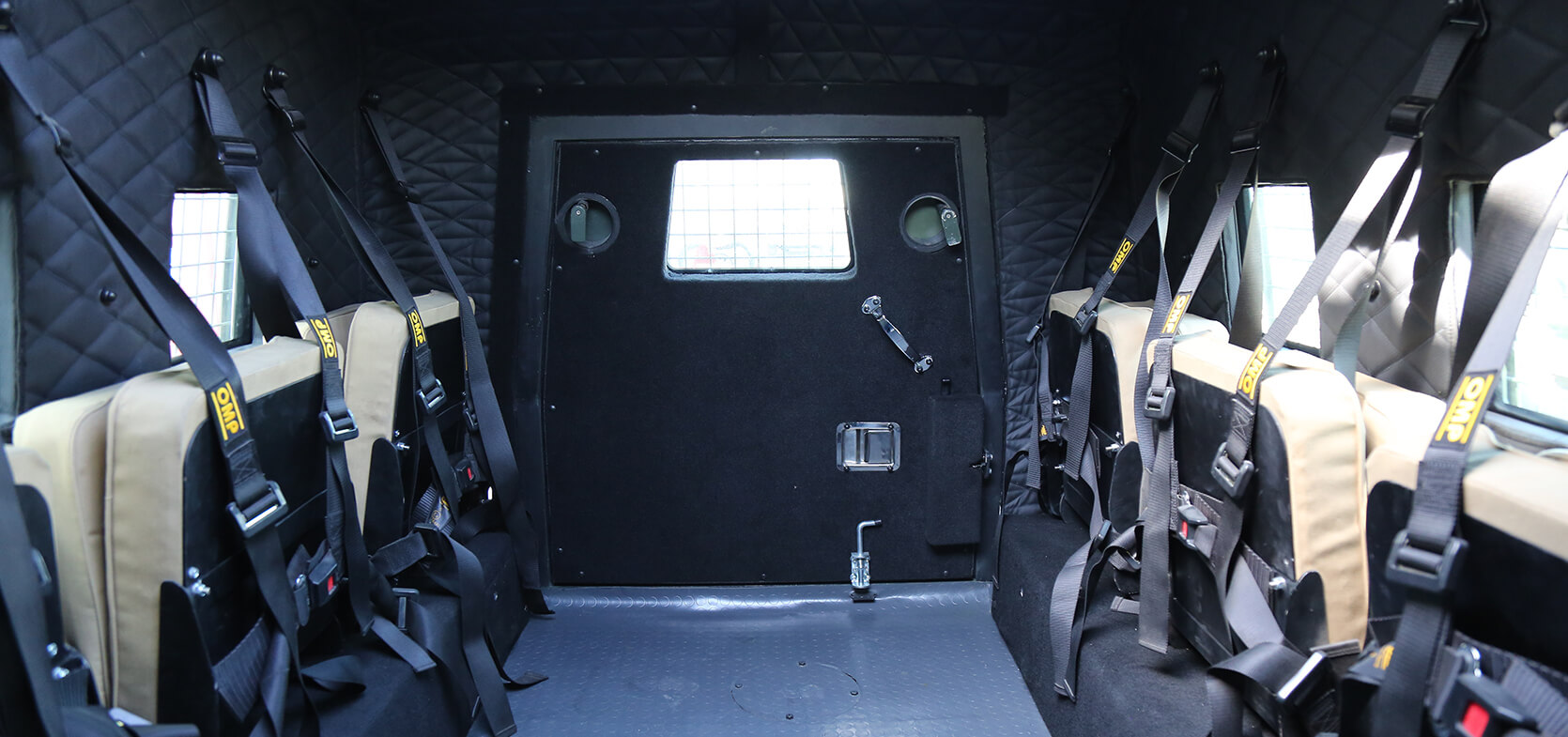
Before buying a used armored car in Dubai, establish three things: who can sell it, what was built, and what condition it is in today. A registration card, an old protection certificate and a clean-looking interior each answer only part of that decision.
Ask for the vehicle and conversion records before committing, arrange an independent inspection that covers both the base car and the armoring, and confirm the transfer and registration route for your intended use. Keep any missing evidence marked as unresolved.
For a UAE buyer, the key distinction is whether the car is already registered locally, held for export, or being imported. Start with that status rather than assuming a Dubai listing means it is ready for UAE road use. SchutzCarr’s UAE armored vehicle guide provides context for the wider vehicle and destination discussion.
Establish the vehicle’s identity and the seller’s authority
Request the vehicle identification number, or VIN, together with the model year, variant, current mileage and registration or possession documents appropriate to its status. Ask the inspector to match the vehicle’s identity to the records rather than relying on an advert or a photograph of a registration card.
Identify the registered owner and the person or company selling the car. If they differ, ask for the documents establishing the seller’s authority to act. For a company-owned vehicle, clarify who can approve and complete the sale.
Ask about any recorded mortgage, outstanding fines or other issue affecting transfer, and establish how it will be resolved through the relevant official process. RTA’s vehicle ownership-change service includes instructions concerning fines and mortgage release. Confirm the requirements for the particular vehicle, buyer and transaction channel before arranging completion.
Treat the seller’s agreement to sell, payment arrangements and the official ownership-transfer process as separate items to coordinate. Record when ownership and possession will pass, which documents you will receive, and what happens if a required transfer step cannot be completed.
Build a history of the car and its armoring
A used armored vehicle needs a history of the base car and a history of the conversion. Ask for both.
For the base vehicle, request service records, inspection results, mileage records and details of accident repairs, flood or water damage, structural repairs and previous modifications. Compare dates and recorded mileage across the documents. Ask the seller to explain inconsistencies and gaps in writing.
For the armoring, request the converter’s identity, conversion date, original specification and available build or handover records. Then ask what has changed since conversion: replacement glazing, door work, accident repairs, corrosion treatment, removed equipment or alterations to the interior and seating.
Request written disclosure of any known incidents affecting the protective systems, including impact damage and the repairs that followed. Do not assume that a vehicle described as “ex-fleet” or “diplomatic” has a complete history; ask for the records supporting that description.
Create a simple timeline: base vehicle supplied → conversion completed → major repairs or replacements → current inspection. Link each event to an invoice, work order, build record or other supporting document. Where no record exists, leave the gap visible.
Check what a history report actually covers
RTA states that its Technical Vehicle Status Report requires the owner’s consent and does not include vehicle accident data. It also warns that available records may be incomplete. Check the report’s eligibility and coverage for the vehicle concerned rather than treating it as a complete history. RTA Technical Vehicle Status Report guidance.
Accident inquiries are a separate check. For example, Abu Dhabi Police provides an accident-inquiry service using the chassis number. Use the relevant official services for the vehicle’s history and registration jurisdiction. A result showing no recorded accident should not be treated as proof that no damage or repair has ever occurred.
For an imported car, ask for the available records from its previous country as well. UAE records alone cannot fill an undocumented period abroad. Use official reports within their stated permissions and restrictions.
Connect the protection documents to the car as it stands
Ask for the claimed protection standard, edition, classification and supporting reports or certificates. Clarify whether each document concerns a material, a component or a vehicle configuration, and how it relates to this particular build. The ballistic protection standards guide explains terminology to discuss with the supplier or technical reviewer.
Do not require every laboratory report to carry the car’s VIN: some evidence concerns a tested design or component. Instead, request the build records that connect the offered vehicle to the relevant evidence, and ask a qualified reviewer to explain the relationship and its limits.
Then check subsequent changes. If glazing was replaced, request its identification, specification and installation records. If the vehicle was repaired or altered, ask what assessment supports the protection claim after that work.
An original certificate documents its stated scope; it does not, by itself, establish the present condition of a used vehicle. Keep the distinction between original specification, documented changes and current inspection findings clear. Ask for uncertainty to be recorded rather than replaced with a general assurance that the car is “still certified”.
Commission an inspection with a written scope
Arrange an inspection independent of the seller, with suitable expertise in the base vehicle and armored conversions. One workshop may not cover both areas. Ask who will assess each and what the inspection can—and cannot—establish.
The base-vehicle inspection should address condition, diagnostic faults, service needs, evidence of previous damage and the mechanical systems relevant to the finished vehicle. Ask for attention to brakes, suspension, steering, tyres, cooling and electrical systems, with findings recorded against the vehicle identity and mileage.
The armoring review should address the documented conversion, subsequent repairs or alterations, glazing condition, door operation and other build-specific systems. Ask the inspector to distinguish visible findings from areas not assessed or not accessible. A report that says “not inspected” leaves an open question.
Request photographs and written findings, together with the work needed before use and any further specialist assessment required. Have the seller’s proposed repairs listed separately from work already completed. If repairs are agreed, arrange the evidence and reinspection needed to close those items.
Give the glazing its own inspection record
Ask for cracks, chips, scratches, clouding, layer separation and visibility concerns to be assessed by someone familiar with the installed glazing. Record which window is affected and obtain the applicable manufacturer’s assessment or guidance.
Armored-glass manufacturer GuS distinguishes between different types of damage and layer separation, with different implications. Its guidance supports obtaining a specific assessment rather than assuming that every visible defect is merely cosmetic—or that every defect has the same consequence. GuS armored-glass inspection guidance.
Ask whether repair or replacement is appropriate for that glazing, what records will accompany the work, and whether a compatible replacement can be obtained. A general windscreen-service promise does not answer those build-specific questions.
Confirm usable capacity and everyday operation
Check the car in its current configuration. Ask for its finished mass, the fuel and equipment included in that figure, applicable vehicle and axle limits, and the remaining capacity for people and luggage. Distinguish a current weighing result from an estimate or an old build-sheet figure.
Give the inspector your actual passenger, luggage and equipment requirement. Seating space alone does not establish the capacity to carry that load.
For Dubai and inter-emirate use, assess the practical details: air conditioning throughout the cabin, passenger access, door operation, visibility, controls, parking access and luggage space with the required seats in use. Verify the equipment advertised with this car, including what works and what has been removed or disabled.
Arrange any road test only once the vehicle’s condition, legal road-use status and insurance arrangements have been established. Have an appropriately licensed driver familiar with the vehicle assess its operation; an ordinary test drive cannot establish a ballistic protection rating.
Establish the UAE transfer, registration and insurance route
Ask the relevant licensing authority how the vehicle’s current status and modifications affect your proposed transaction. Supply the exact vehicle identity, conversion information and available approval records.
RTA’s inspection guidance says vehicles with modified bodies are referred to the Technical Inspection Committee at the Licensing Department. For a Dubai purchase, ask how that applies to this vehicle and whether further assessment or documents are needed. An earlier registration or inspection record should not be assumed to settle every question about its current configuration or a new transaction. RTA vehicle inspection guidance.
For registration in another emirate, confirm the route with that emirate’s relevant authority. If the car is imported or export-only, establish the steps needed before any intended UAE road use. MOIAT provides a product-status statement service for imported used vehicles; ask whether it applies to your case and what other approvals remain. It should not be treated as a substitute for the full registration process.
Before committing, give the insurer accurate details of the conversion and intended use. Obtain written confirmation of the cover offered, its start date and relevant conditions or exclusions. Do not assume the seller’s insurance will cover your ownership or collection arrangements.
Use this document-and-check record
Copy the table into your own notes. For each item, record the document reference, who checked it, the date and any remaining action. Use Awaiting evidence or Further assessment needed where appropriate. This is a buyer’s due-diligence record; the licensing authority confirms the documents required for the actual transaction.
| Item | What to establish before committing |
|---|---|
| Vehicle identity and status | VIN matched to the car and records; current registration, possession, import or export status |
| Seller’s authority | Owner identified; authority to sell documented where the seller acts for someone else |
| Transfer restrictions | Mortgage, fines and other relevant issues checked; official resolution and completion route established |
| Base-vehicle history | Service, mileage, damage and repair records reconciled; missing periods identified |
| Conversion history | Converter, date, original specification and build records identified |
| Protection evidence | Document scope understood; connection to the build and later changes assessed |
| Present condition | Independent mechanical and armoring findings; glazing assessment; uninspected areas recorded |
| Usable capacity and functions | Current mass/load basis, applicable limits, remaining capacity and required cabin functions checked |
| UAE road use and insurance | Relevant authority’s requirements and approval status confirmed; insurance arrangements established |
| Completion and support | Agreed repairs closed with evidence; transfer/handover documents, warranty position and service arrangements recorded |
Example: replacement glass with no supporting record
Illustrative situation: the seller supplies the original conversion documents but says a side window was replaced later. There is no replacement specification or installation record.
Record the original documents as received and the replacement-glazing evidence as Awaiting evidence. Ask for the work order and glazing identification, then obtain a suitable technical assessment of how the replacement affects the claimed configuration. Do not mark the protection review complete simply because the original documents are present.
Close the gaps before arranging handover
Ask whether any base-vehicle or conversion warranty remains and whether it transfers to you. Obtain the actual terms and confirmation from the relevant provider. If no warranty is offered, record that clearly. Establish where the car can be serviced and how build-specific parts can be identified and obtained.
Put agreed repairs, included equipment, documents, ownership-transfer arrangements and collection conditions in writing. The guide to comparing armored vehicle quotes can help you turn those answers into a clear purchase scope.
Pause the purchase if the vehicle identity, authority to sell, material protection questions or intended road-use route cannot be established. Missing evidence should lead to clarification or further assessment before commitment.
Discuss a used armored vehicle inquiry with SchutzCarr
Share the model, year, current location and registration status, intended UAE use, passenger and luggage needs, and the document or condition questions you need resolved. You can review SchutzCarr’s selected stock vehicles as an inquiry starting point; confirm each vehicle’s condition, availability and documentation directly rather than assuming a listing is used or ready for transfer.
Contact SchutzCarr about your vehicle requirements and paste the relevant details into Project details. Arrange any supporting-document transfer with the team after contact, respecting the owner’s consent and any restrictions on sharing reports.