

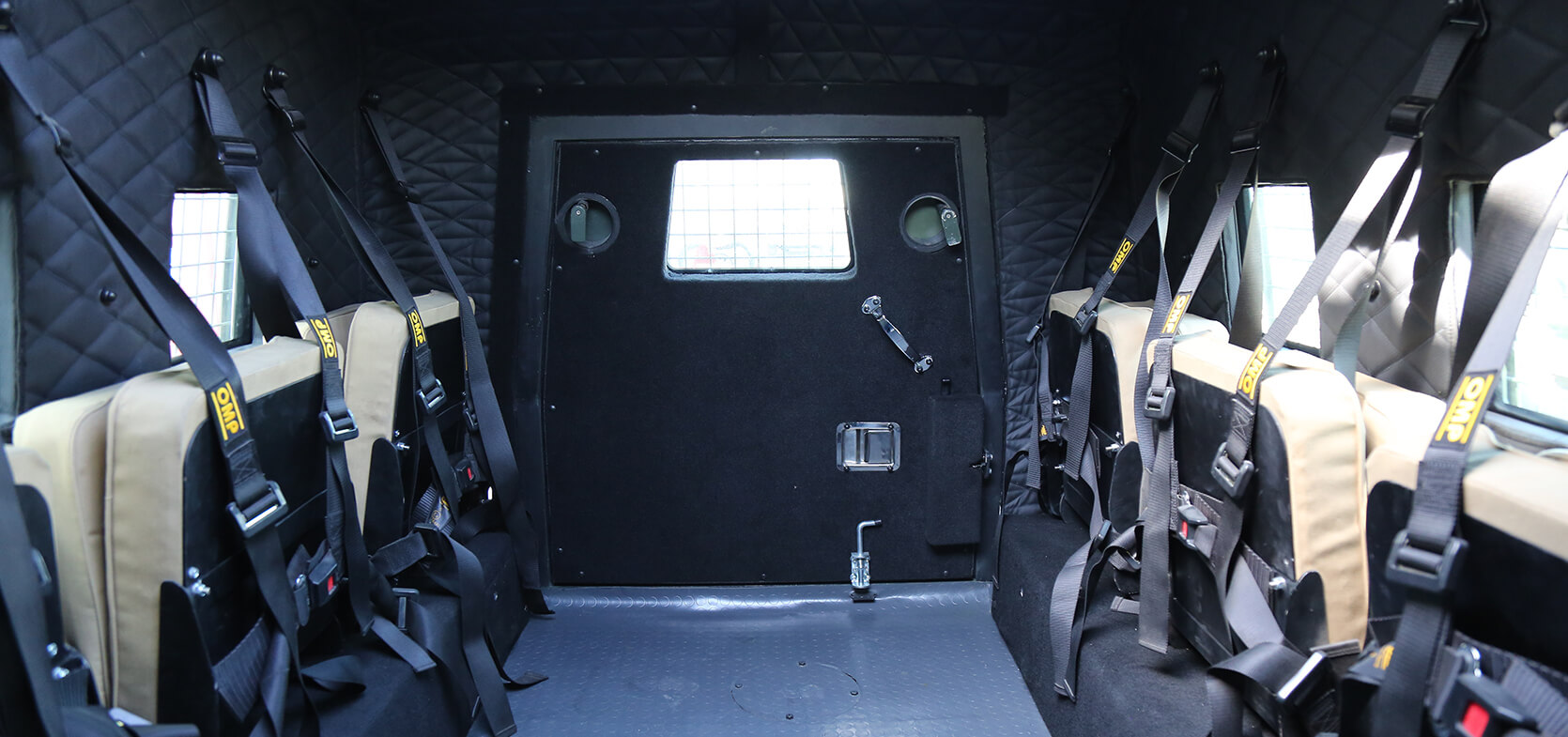
An armored car has no single standard weight. Its completed mass depends on the base vehicle, protection package, glazing and fitted equipment. For a Dubai or UAE buyer, the useful question is how much capacity remains for the people and items the vehicle must carry.
Ask for the weight of the completed configuration, the documented limits applicable to that vehicle, and the fuel and load conditions behind every figure. A brochure seating count or an estimate of added armor weight cannot answer all three.
This guide includes a worksheet and a fictional worked example to help you organise that evidence before accepting a vehicle. It is a buyer’s checking method; the arithmetic does not establish engineering suitability or permission to use a vehicle on the road.
Added armor weight and finished vehicle weight are different figures
“Armoring adds this much weight” describes a change. It does not tell you the completed vehicle’s total mass or how much load it can still carry.
Start by asking which configuration each quoted figure describes. Does it include the agreed glass, protection materials, fixed equipment and accessories? Is it an estimate before the build, a measurement after completion, or an old figure from an earlier configuration?
For an existing vehicle, later changes also need to be accounted for. A replacement component, additional equipment or altered interior can make an earlier weight record an unsuitable baseline for the current load calculation.
Use the vehicle armoring service discussion to define the intended configuration. Then ask how its finished weight will be verified. Record the vehicle identity, configuration, measurement date and the items present during weighing together.
Understand the limits before calculating what remains
Three terms help separate what a vehicle weighs from its limits:
- Gross vehicle weight rating, or GVWR: the maximum allowable fully loaded weight stated for the vehicle, including its own mass, equipment, occupants and cargo.
- Gross axle weight rating, or GAWR: the maximum stated load for an individual axle. Front and rear limits must be checked separately.
- Remaining allowance in a stated condition: the difference between the applicable total-weight limit and the vehicle’s mass in that particular condition. What you can add depends on what is already included.
Ford’s vehicle-weight glossary explains the relationship between vehicle weight, ratings, equipment and payload. Those general concepts are useful, but a Ford reference does not supply the ratings for a different vehicle or a particular armored conversion.
Obtain the documents applicable to the exact completed vehicle. Ask the supplier to reconcile any difference between original labels, conversion documents and the figures in its proposal. Label formats and locations vary by vehicle and market; a missing label is not a reason to substitute a figure found online.
Keep total and axle limits separate. Adding the front and rear axle ratings together does not replace the applicable total-weight limit. A vehicle can have an unresolved axle-load issue even when a total-weight calculation leaves an apparent allowance.
Agree a baseline that avoids double-counting
Before calculating, write one sentence describing the baseline:
Completed vehicle with the agreed fixed equipment and stated fuel level; identify any occupants, luggage or removable equipment already included.
Match the baseline fuel condition to the intended loaded check. For a vehicle expected to operate with a full tank, use a full-tank baseline. Do not apply a partial-tank measurement to full-tank operation; request a revised baseline measurement in the intended fuel condition first.
That sentence matters as much as the number beside it. If the same driver was present during weighing and is included in the intended trip, do not add that driver again. If the weighing record excludes luggage, include the luggage in your planned additional load.
Ask for these details alongside the measurement:
- Vehicle and completed-configuration identification.
- Date, measurement provider and weighing record reference.
- Fuel condition and any items still to be installed.
- Occupants, cargo and equipment present during weighing.
- Total mass and, where recorded, separate front and rear axle loads.
A pre-build estimate can help compare proposals. Keep it labelled Estimated, with a clear plan for checking the completed configuration. Do not relabel it as measured because it appears on a signed quotation.
Ford’s loading guidance distinguishes the vehicle’s original load information from the effect of subsequently fitted equipment, and treats individual axle limits separately. Use the appropriate manual and completed-vehicle documents for your own purchase.
Define the load you actually need in Dubai or the UAE
Give the supplier an operating requirement that can be checked. For an airport transfer, that could mean the driver, three passengers, their luggage and the removable equipment carried on every trip. A vehicle used for staff transport may need a different load arrangement from one used by an executive and a driver.
Record combined occupant masses without collecting unnecessary personal details. Include luggage and equipment by realistic trip configuration, rather than assuming that empty seats or an apparently spacious boot settle the weight question.
Identify what is fixed to the vehicle and what is added for each journey. Count each item once. If equipment will be installed after handover, have its effect assessed before treating the earlier calculation as current.
Also state where the vehicle will operate. Purchasing through Dubai, using it in the UAE and exporting it to another destination are different project contexts. Confirm applicable vehicle-use and documentation requirements separately; this worksheet does not determine registration or import eligibility.
The UAE armored vehicle buyer page provides the wider starting point for discussing the vehicle, intended use and destination.
Weight-and-payload worksheet
Use one worksheet for one vehicle configuration and one intended load arrangement. Enter kilograms consistently. Keep the underlying documents with it.
For the last column, use Awaiting evidence, Estimated, Measured, Documented or Calculated, followed by the source reference and date. For calculated rows, identify the input rows and their evidence. Use Not applicable only with an explanation. Receiving a document is not the same as resolving whether it applies to the completed vehicle.
| Item | What to record | Value, evidence and status |
|---|---|---|
| Vehicle and configuration | Vehicle identity, build/configuration reference and date; identify outstanding installations | ___ |
| Applicable total-weight limit | Stated limit and document establishing its applicability to this vehicle | ___ kg; reference/status: ___ |
| Applicable front axle limit | Front limit and supporting document | ___ kg; reference/status: ___ |
| Applicable rear axle limit | Rear limit and supporting document | ___ kg; reference/status: ___ |
| Baseline condition | Intended fuel condition and confirmation the baseline matches it; fixed equipment; occupants, luggage and removable items already included | ___ |
| Baseline total mass | Completed-vehicle measurement, or clearly identified estimate pending measurement | ___ kg; reference/status: ___ |
| Baseline axle readings | Front and rear readings taken in the recorded baseline condition | Front: ___ kg; rear: ___ kg; reference/status: ___ |
| Additional occupants | Driver and passengers not already counted in the baseline | ___ kg; basis: ___ |
| Additional luggage and equipment | Items absent from the baseline; list fixed additions separately from removable load | ___ kg; basis: ___ |
| Total additional load | Additional occupants plus additional luggage and equipment | ___ kg; calculation: ___ |
| Planned loaded total | Baseline total mass plus total additional load | ___ kg; calculation: ___ |
| Total-weight difference | Applicable total-weight limit minus planned loaded total; negative means the plan exceeds that limit | ___ kg; calculation/status: ___ |
| Intended loaded axle checks | Front and rear readings in the intended load arrangement, compared separately with their applicable limits | Front: ___; rear: ___; evidence/status: ___ |
| Remaining questions | Other applicable limits, configuration suitability, missing evidence, responsible person and required action | ___ |
The calculated total-weight difference is not a complete payload approval. A positive result leaves the axle checks and any other applicable limitations to be resolved. An unknown baseline or undocumented limit leaves the calculation unresolved.
Worked example: spare total allowance, axle checks still pending
Fictional example: These invented figures demonstrate the worksheet. They describe no SchutzCarr vehicle, model, customer or approved build.
Assume the example file contains a documented applicable total-weight limit of 4,500 kg and a measured completed-vehicle baseline of 3,800 kg. The baseline includes the agreed fixed equipment and a full fuel tank. It includes no people, luggage or removable equipment.
The buyer’s intended trip adds:
| Additional load | Fictional mass |
|---|---|
| Driver | 80 kg |
| Three passengers combined | 240 kg |
| Luggage | 90 kg |
| Removable equipment | 40 kg |
| Total additional load | 450 kg |
The total calculation is:
- Planned loaded total: 3,800 + 450 = 4,250 kg.
- Difference below the stated total-weight limit: 4,500 − 4,250 = 250 kg.
The file still has no front or rear axle readings for that intended loaded arrangement. The correct worksheet conclusion is:
Total-weight calculation leaves 250 kg below the stated total limit. Loaded axle checks remain awaiting evidence. Vehicle/load suitability remains unresolved.
It would be premature to call this “250 kg of usable spare capacity.” The missing axle checks could affect the intended load arrangement, and the calculation does not settle other applicable vehicle or component limitations.
If the 3,800 kg baseline had already included the driver, the additional-load total would have to exclude that same driver. If fixed equipment were added later, the configuration and baseline would need updating. The method depends on consistent inputs, not just correct subtraction.
A suspension upgrade does not answer the whole question
A proposal may mention suspension, brakes, tires or other changes intended to accommodate the build. Ask what was changed, why, and which documents support the completed vehicle’s stated limits and intended use.
Do not treat a list of upgraded components as proof that an original rating has increased. Ford’s loading guidance explicitly distinguishes higher-capacity replacement tires from an increase in vehicle or axle ratings. The broader buyer question is whether the supplier can substantiate the figures for the exact completed configuration.
Similarly, a protection-level description does not supply a load allowance. Use the ballistic protection standards guide for the protection discussion, and retain a separate record for weight and load evidence.
Ask for the evidence before accepting the vehicle
Agree when estimated figures will be replaced by completed-vehicle measurements, who will arrange them, and how outstanding questions will be closed. Ask for total and individual axle checks in the intended load condition, with the relevant limits identified.
If figures conflict or a planned load exceeds a stated limit, leave the issue open for the supplier and an appropriately qualified vehicle professional to resolve. Do not use a comfortable test drive, a seating count or an empty-vehicle reading as a substitute for the missing load evidence.
You can send this clarification message:
Please confirm the completed configuration and the documented total and front/rear axle limits applicable to this vehicle. Provide the finished-weight record, its date, fuel condition and all occupants or equipment included. Our intended load is [occupants], [luggage] and [equipment], in [seating/load arrangement], with [intended fuel condition]. Please provide a baseline measurement matching that fuel condition. Please identify any double-counted or missing items, provide the planned loaded-total calculation, and confirm how the loaded axle checks and other outstanding suitability questions will be resolved before acceptance.
Keep that response with the worksheet and agreed order documents. The Dubai and UAE quote-comparison guide can help place these requirements into the wider written offer.
Discuss your vehicle and load requirements with SchutzCarr
In the Project details field on the SchutzCarr inquiry form, include your preferred vehicle, operating country, passenger requirement, luggage and equipment needs, and any configuration details already agreed.
If you have weight records, mention their dates and what they include. The first useful step is to make the intended load and missing evidence clear, so the vehicle discussion starts with the requirements it must meet.